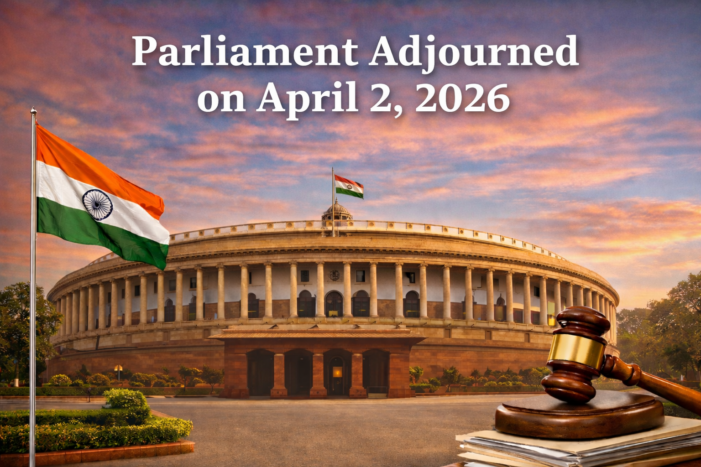
The Budget Session of the Indian Parliament was adjourned on April 2, 2026, in a move described as strategic rather than procedural. Instead of formally proroguing the session, the government has chosen to keep the option open to reconvene Parliament at a later date, depending on evolving political and legislative needs.
Not a Formal End to the Session
Unlike the usual conclusion of parliamentary sessions, this adjournment does not mark a definitive end. By avoiding prorogation, the government retains the constitutional flexibility to call Members of Parliament back without initiating an entirely new session. This approach is being viewed as a calculated step to maintain legislative readiness.
Strategic Considerations Behind the Move
The decision comes in the backdrop of ongoing Assembly elections in several states. With key political leaders and party machinery engaged in campaigning, the adjournment reduces immediate legislative pressure while allowing the government to focus on electoral priorities.
At the same time, it ensures that Parliament can be reconvened quickly if urgent legislative business arises, including the passage of pending bills or addressing emerging national issues.
Legislative Flexibility and Political Timing
Keeping the session open-ended provides the government with tactical flexibility. It can align the reconvening of Parliament with favorable political timing, particularly after the conclusion of elections, when consensus-building and legislative momentum may be easier to achieve.
This approach also signals preparedness to take up important reforms or policy measures without delay, should the need arise.
Implications for Governance
While no immediate legislative business is scheduled, the adjournment reflects a balancing act between governance and electoral politics. It underscores the importance of timing in parliamentary functioning and highlights how procedural tools can be used strategically.
The move may also pave the way for the introduction or passage of key legislations in a more politically conducive environment once electoral activities conclude.
The adjournment of Parliament on April 2, 2026, represents a deliberate and flexible approach to legislative management. By keeping the door open for reconvening, the government has ensured both political focus during elections and readiness to resume parliamentary business when required.

Parliament Adjourned on April 2, 2026: Strategic Pause Amid Political Priorities added by AdminEdu on
View all posts by AdminEdu →