Biometric System to Modernize Attendance Tracking
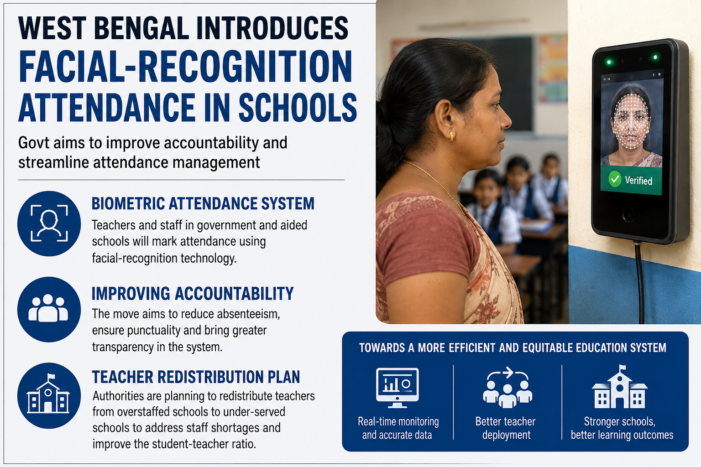
The West Bengal government has introduced a biometric facial-recognition attendance system for teachers and non-teaching staff in government and aided schools. The initiative marks a significant step toward modernizing school administration and improving attendance monitoring across the state.
The new digital system will gradually replace traditional manual attendance registers, allowing schools to track attendance more accurately and efficiently.
Focus on Accountability and Transparency
State education authorities aim to strengthen accountability by using technology to record attendance in real time. Officials believe the system will help reduce absenteeism, discourage proxy attendance, and improve punctuality among school staff.
Automated attendance records are also expected to make administrative processes more transparent and easier to audit, enabling quicker intervention when attendance issues arise.
Real-Time Monitoring for Better Administration
Facial-recognition technology will allow education departments to access attendance data instantly. This real-time monitoring can help district officials identify patterns of irregular attendance and respond faster to operational challenges.
The move is part of a wider push to digitize governance and improve efficiency in public education management.
Teacher Redistribution to Address Staff Shortages
In addition to attendance reforms, the government is preparing a teacher redistribution plan to address staffing imbalances across schools. Teachers from institutions with excess staff may be reassigned to schools facing shortages.
This redistribution aims to improve teacher availability in underserved areas and ensure a more balanced student-teacher ratio across the state.
Supporting Better Learning Outcomes
Education experts believe that improving teacher presence and balancing staff distribution can directly benefit classroom learning. Schools with adequate teaching staff are better positioned to maintain consistent instruction and academic support for students.
The combined reforms are expected to improve resource utilization and strengthen overall school performance.
Challenges in Implementation
Successful implementation will depend on infrastructure readiness, staff training, and secure handling of biometric data. Concerns around privacy and data protection may also need careful attention as the system expands.
Clear operational guidelines and technical support will play a key role in ensuring smooth adoption across schools.
Toward Smarter School Governance
West Bengal’s latest reforms reflect a growing emphasis on technology-driven governance in education. By combining biometric attendance with strategic teacher deployment, the state aims to build a more efficient, accountable, and equitable school system.

West Bengal Rolls Out Facial-Recognition Attendance in Schools added by AdminEdu on
View all posts by AdminEdu →