Shift from Objective to Analytical Assessment
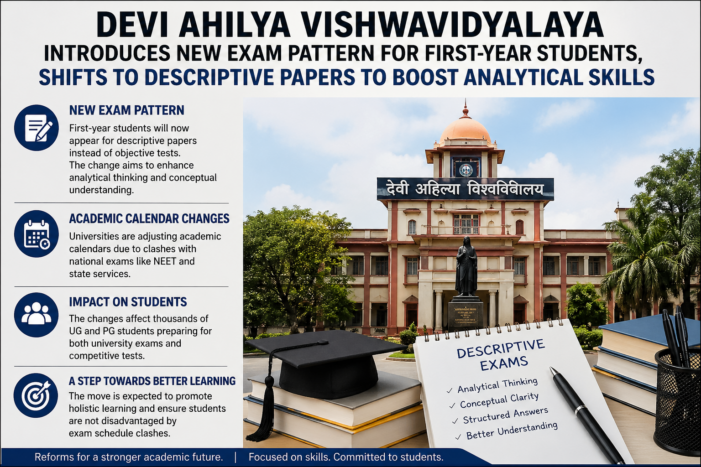
Devi Ahilya Vishwavidyalaya (DAVV) has announced a significant reform in its examination system for first-year undergraduate students. Moving away from the conventional objective-type tests, the university will now conduct descriptive examinations aimed at evaluating students’ analytical thinking, conceptual clarity, and writing skills.
Officials stated that the previous multiple-choice format often encouraged rote learning, while the new descriptive pattern is designed to promote deeper understanding and critical reasoning among students.
Focus on Holistic Learning Outcomes
The revised exam pattern will require students to provide detailed answers, case-based explanations, and structured responses. Faculty members believe this transition will better prepare students for higher education and competitive examinations by enhancing their ability to articulate ideas effectively.
The university has also initiated faculty training programs to ensure smooth implementation of the new system and uniform evaluation standards across departments.
Academic Calendar Adjustments Amid Exam Clashes
In a parallel development, several universities across India are revising their academic calendars due to scheduling conflicts with major national and state-level entrance examinations. Exams such as NEET and various state public service commission tests have overlapped with university assessments, creating logistical challenges for students.
To address this, institutions are rescheduling semester exams, extending deadlines, and modifying teaching schedules to accommodate affected candidates.
Impact on Thousands of UG and PG Students
The overlapping schedules have impacted thousands of undergraduate and postgraduate students who are preparing for both university exams and competitive tests. Many students had raised concerns about insufficient preparation time and exam-day clashes.
University administrations are now coordinating with examination bodies and government authorities to minimize disruptions and ensure that students are not disadvantaged.
A Step Toward Academic Flexibility
Education experts have welcomed these changes, noting that both the introduction of descriptive assessments and the flexibility in academic calendars reflect a student-centric approach. These measures are expected to improve learning outcomes while addressing the evolving needs of higher education in India.

Devi Ahilya Vishwavidyalaya Introduces Descriptive Exam Pattern for First-Year Students added by AdminEdu on
View all posts by AdminEdu →