October 27, 2025
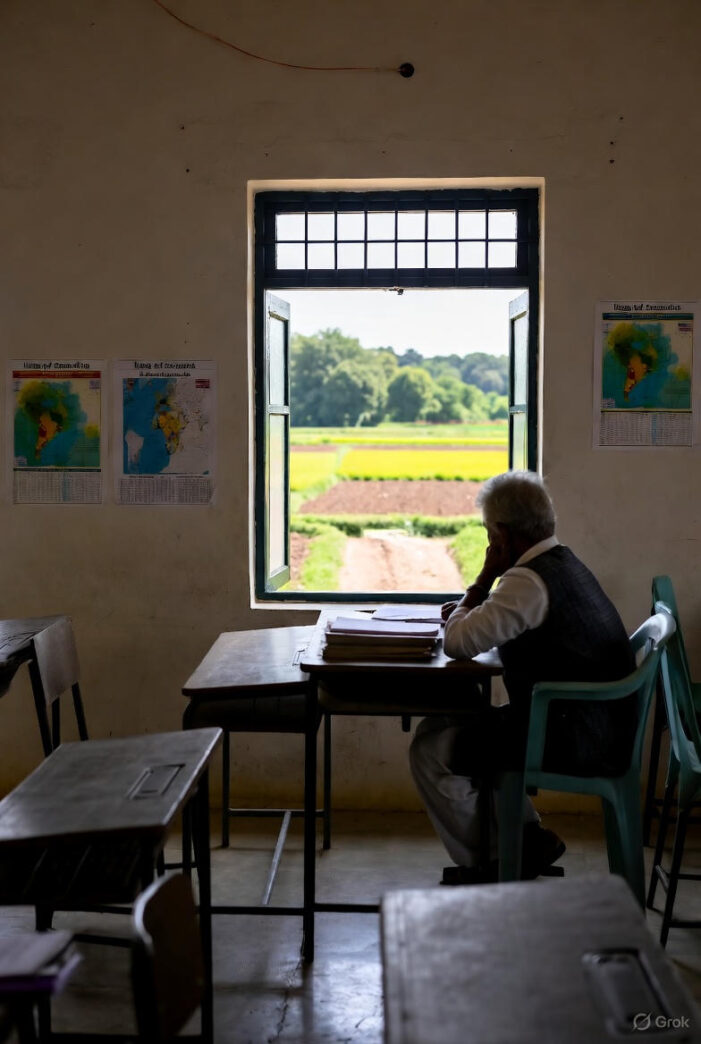
In a nation where education is enshrined as a fundamental right under Article 21A of the Constitution, the revelation that nearly 8,000 schools across India operated without a single student in the 2024-25 academic year stands as a stark indictment of systemic inefficiencies. These “ghost schools”—empty on the ground but alive on paper—continue to draw salaries for over 20,000 teachers, siphoning resources that could transform understaffed classrooms elsewhere. As fresh data from the Ministry of Education (MoE) underscores this anomaly, educators, policymakers, and activists are intensifying calls for urgent reforms: merging non-viable institutions, redeploying personnel, and redirecting funds toward learner-centric initiatives. This article delves into the scale of the problem, its underlying causes, the disproportionate impact on vulnerable communities, and the pathways forward for a more equitable education ecosystem.
The Scale of the Crisis: A Snapshot from Official Data
According to the MoE’s Unified District Information System for Education Plus (UDISE+) report for 2024-25, released last week, exactly 7,993 government schools nationwide recorded zero student enrollments—a welcome 38% decline from the 12,954 such schools in the previous year. Yet, the persistence of this issue remains troubling. These vacant institutions collectively employ 20,817 teachers, with an estimated annual salary expenditure exceeding ₹1,800 crore (approximately $215 million), based on average government teacher pay scales.
The distribution is uneven, with a handful of states bearing the brunt. West Bengal tops the list with a staggering 3,812 zero-enrollment schools, home to 17,965 teachers—nearly 86% of the national total for educators in such facilities. Telangana follows closely with 2,245 schools and 1,016 teachers, while Madhya Pradesh reports 463 schools employing 223 staff. Uttar Pradesh, despite aggressive merger drives, still logs 81 such schools.
In contrast, several states and Union Territories have eradicated the problem entirely. Haryana, Maharashtra, Goa, Assam, Himachal Pradesh, Chhattisgarh, Nagaland, Sikkim, Tripura, Delhi, Puducherry, and others like Lakshadweep and Chandigarh report zero instances of empty schools. This disparity highlights varying levels of administrative resolve and demographic pressures.
To visualize the concentration:
| State/UT | Zero-Enrollment Schools | Teachers Employed |
|---|---|---|
| West Bengal | 3,812 | 17,965 |
| Telangana | 2,245 | 1,016 |
| Madhya Pradesh | 463 | 223 |
| Uttar Pradesh | 81 | Not specified |
| Others | 1,392 | 1,613 |
| National Total | 7,993 | 20,817 |
Source: Ministry of Education UDISE+ 2024-25 data
This table underscores how a few regions dominate the national figure, amplifying the urgency for targeted interventions.
Why Do These Schools Exist? Unpacking the Root Causes
The phenomenon of zero-enrollment schools isn’t new—earlier UDISE+ reports from 2023-24 pegged the number at nearly 13,000, predominantly in West Bengal and Rajasthan. Several interconnected factors perpetuate this inefficiency:
- Demographic Shifts and Rural-Urban Migration: India’s rural population is declining as families migrate to cities for better opportunities, leaving behind sparsely populated villages. Schools built decades ago to serve agrarian communities now stand deserted, unable to attract even a handful of students. In West Bengal’s rural belts, for instance, low birth rates and out-migration have hollowed out enrollment.
- Proximity to Larger Institutions: Many zero-enrollment schools are within 3-5 km of bigger, better-equipped facilities, prompting parents to consolidate choices. The Right to Education (RTE) Act, 2009, mandates neighborhood schools, but overlapping infrastructure leads to underutilization.
- Administrative Inertia and Job Security: Teachers’ unions and local politics often resist mergers, viewing them as threats to employment. In states like West Bengal, where teacher recruitment has been politicized, payrolls swell without corresponding student needs. Bureaucratic hurdles delay audits, allowing “ghost” payrolls to persist.
- Data Gaps and Reporting Lags: UDISE+ relies on self-reported data from states, which can be inconsistent. Some schools may underreport enrollments to secure funds, while others linger due to outdated records.
These causes compound to create a vicious cycle: empty schools drain budgets, leaving functional ones starved of resources.
The Human and Fiscal Toll: Wasted Potential and Widening Inequities
The financial hemorrhage is evident—₹1,800 crore annually could fund digital labs, teacher training, or scholarships for millions. But the human cost is steeper. Over 20,000 teachers, many qualified and dedicated, report to vacant classrooms, their skills untapped. This misallocation deprives overcrowded schools—over 1.1 lakh single-teacher institutions serve 33 lakh students—of much-needed staff. In Uttar Pradesh alone, single-teacher schools enroll the highest number of students nationwide, yet quality suffers.
For students, the ripple effects are dire. Resources funneled into ghost schools exacerbate the digital divide and infrastructure deficits in active ones. Rural girls, Scheduled Castes, and tribal children—already at risk of dropout—are hit hardest, as under-resourced schools fail to deliver RTE-mandated amenities like clean toilets or libraries. A 2025 analysis warns that such inequities could derail India’s Sustainable Development Goal 4 (quality education) targets by 2030.
Moreover, these schools symbolize deeper governance failures. Past scandals, like Maharashtra’s 2016 “ghost student” fraud where crores were siphoned for fictitious enrollees, echo in today’s payroll anomalies. Without accountability, public trust erodes.
Voices of Reform: Calls for Reallocation and Learner-Focused Overhauls
The MoE’s latest advisory is unequivocal: states must act by December 2025, submitting plans for mergers, teacher redeployments, and building repurposing. “School education is a state subject, but optimal resource use is non-negotiable,” a senior official emphasized, urging shifts toward infrastructure consolidation and staff rationalization.
Activists and experts amplify these demands. Praveen Khare, education policy analyst at the Centre for Policy Research, argues for a “learner-first” model: “Redirect these 20,000 teachers to high-need areas, invest in vocational training under NEP 2020, and convert vacant buildings into community skill hubs.” The National Education Policy (NEP) 2020, with its emphasis on school complexes and equity, provides a blueprint—yet implementation lags due to state resistance.
State-level actions offer glimmers of hope. Uttar Pradesh’s Madhyamik Shiksha Parishad plans to derecognize schools with three consecutive zero-enrollment years. Bihar, despite local pushback, is piloting mergers amid similar challenges. In Telangana, officials are exploring tech-driven enrollment tracking to prevent future ghosts.
Civil society is mobilizing too. The “Education for All” coalition, tracking UDISE+ data, advocates for real-time audits and incentives for high-performing districts like Maharashtra. Teachers’ forums, while protective of jobs, increasingly support redeployment over idleness.
Pathways to Redemption: A Blueprint for Change
To dismantle this network of empty schools, a multi-pronged strategy is essential:
- Immediate Mergers and Redeployments: Prioritize closing schools within 5 km of alternatives, reallocating teachers via a national mobility portal under Samagra Shiksha.
- Tech-Enabled Monitoring: Integrate Aadhaar-linked biometrics and AI analytics into UDISE+ for proactive detection of anomalies.
- Incentivized Reforms: Tie central funding to merger targets, rewarding states with grants for infrastructure upgrades in merged complexes.
- Community Engagement: Involve parents and locals in repurposing—turning schools into anganwadis, libraries, or eco-centers—to build buy-in.
- Capacity Building: Train redeployed teachers in NEP-aligned pedagogies, focusing on STEM and inclusivity for marginalized groups.
Success stories from zero-incident states like Haryana—through vigilant audits and parent outreach—prove feasibility. With political will, India could reclaim ₹1,800 crore yearly for 24.8 crore students, fostering a truly learner-focused system.
Conclusion: From Ghosts to Guardians of Tomorrow
The 7,993 zero-enrollment schools are more than statistics—they are symbols of squandered promise in a country aspiring to be a global knowledge superpower. As West Bengal’s 3,812 empty halls echo with silence, the clarion call grows louder: reallocate, reform, revitalize. By heeding these imperatives, India can pivot from payroll preservation to pupil empowerment, ensuring no child is left behind in the march toward equitable education. The December deadline looms; the choice is clear—haunt the past or illuminate the future.
This article draws on Ministry of Education data and expert analyses as of October 27, 2025. For updates, visit udiseplus.gov.in.

Zero-Enrolment Schools Spotlight: Nearly 8,000 Schools Nationwide in India Have No Students but Retain Over 20,000 Teachers on Payroll, Prompting Calls for Resource Reallocation to Prioritize Learner-Focused Education added by AdminEdu on
View all posts by AdminEdu →
It’s alarming to see how many schools are still operating without students, while so many others struggle with overcrowded classrooms and lack of resources. A reallocation of resources, including teachers, could make a huge difference in the lives of students in need.