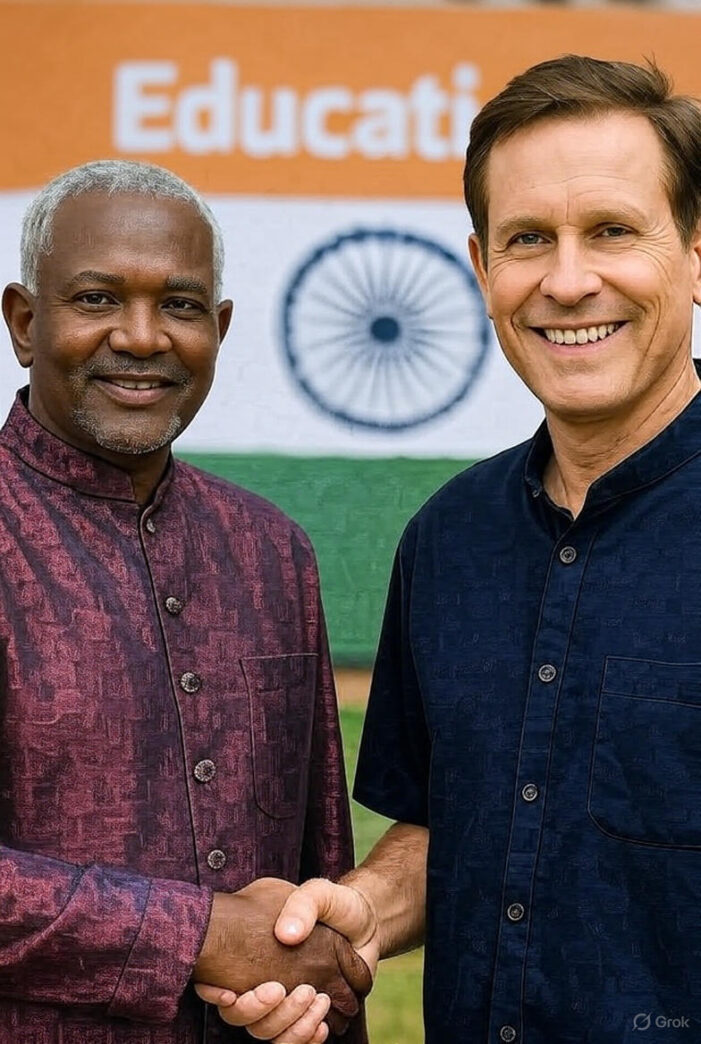
Picture this: a welder in Andhra Pradesh earning a globally recognized certificate without leaving home, or a Mumbai barista mastering latte art through a blended TAFE program co-designed with local cafes. It’s not a distant dream—it’s the future being sketched out today.
This morning, we at the Australia India Institute (AII) hosted a buzzing hybrid roundtable from the University of Melbourne, launching our latest research snapshot: New Frontiers for Australian Dual-Sector Education in India. Over 50 educators, policymakers, and industry voices—from Melbourne’s lecture halls to Delhi’s virtual breakout rooms—gathered to explore one big idea: bringing Australia’s world-class VET and TAFE systems directly into Indian states to build job-ready skills at scale.
So, What’s the Big Deal?
Australia’s dual-sector institutions (think Holmesglen, TAFE NSW, or William Angliss) are unique. They offer both hands-on vocational training and university degrees under one roof. In India, where over 600 million people are under 25, this model could be a game-changer.
Our new report maps out practical, state-level partnerships that match Australian know-how with India’s regional needs. Want to train 10,000 solar technicians in Gujarat? There’s a TAFE module for that. Need AI lab instructors in Andhra Pradesh government schools? Let’s co-design a micro-credential.
Highlights from Today’s Roundtable
- Nara Lokesh (IT Minister, Andhra Pradesh) joined live from India:
“We’ve invited Griffith and Melbourne universities to set up centers here. But we don’t just want degrees—we want skills. TAFE-style training in robotics, AI, and green tech is exactly what our youth need.”
- Professor Dwight Ergintuna (VIT Australia):
“Australian VET grads have 90% employment rates because employers help write the curriculum. Imagine that model scaled across Indian IT parks and manufacturing hubs.”
- Real Stories, Real Impact:
A Mumbai engineer trained at Holmesglen Institute shared how her TAFE certificate in sustainable construction opened doors at Tata Projects. “It wasn’t just theory—it was doing.”
The Roadmap: 4 Key Ideas from the Report
- Start with Pilot States
Andhra Pradesh, Maharashtra, and Gujarat are ready to roll. Andhra’s already investing Rs 10 lakh crore (~AUD 1.8B) in industry—perfect for skill hubs. - Co-Create Curricula
Blend TAFE’s practical focus with India’s employability goals. Think:
- Hospitality training for Goa’s tourism boom
- Renewable energy apprenticeships for Rajasthan’s solar parks
- Go Hybrid & Digital
Online theory + in-person workshops + virtual reality simulations = training that fits Indian realities. - Make Qualifications Count Both Ways
Push for mutual recognition under the upcoming Australia-India trade deal. A TAFE certificate in Melbourne should mean something in Chennai.
Why Now?
- India’s National Education Policy 2020 emphasizes vocational training.
- Australia’s International Education Strategy wants deeper, two-way partnerships.
- States like Andhra Pradesh are moving fast—they’ve rolled out AI in high schools and need certified trainers yesterday.
The Bigger Picture
This isn’t just about exporting education. It’s about co-building talent pipelines that fuel factories, startups, and green projects on both sides of the Indian Ocean. As AII CEO Dr. Lisa Singh put it:
“This is bharosa—trust—turned into action. Skills today, shared prosperity tomorrow.”
Want to dive deeper?
Download the full report here (it’s only 20 pages and packed with case studies).
And if you’re a TAFE leader, state official, or just passionate about skills, let’s talk. The next pilot could start in your city.
Missed the roundtable? Catch the highlights on our YouTube channel next week.
P.S. Fun fact: The term “TAFE” might soon be as familiar in Hyderabad as “chai” is in Sydney. 🌏☕
#AusIndiaSkills #VETinIndia #FutureOfWork

Unlocking New Frontiers: How Australian VET-TAFE Could Supercharge Skills in India added by AdminEdu on
View all posts by AdminEdu →
This is such an insightful look at how Australia’s dual-sector VET-TAFE model could fill critical skill gaps in India. The idea of tailoring programs like solar technician training or hospitality skills to local industries feels like a practical way to align education with employability. It’ll be interesting to see how policymakers ensure that these collaborations remain accessible to learners in smaller towns, not just major metros.
I think the focus on state-level partnerships is crucial here. Each region in India has its own set of challenges and opportunities, so a tailored approach to skill development makes so much sense.
It’s exciting to think about how Australian VET-TAFE could help bridge India’s skills gap, especially in rural areas. Tailoring these programs to local needs while offering globally recognized certifications could really give young people the tools to succeed in a global job market.
I love the idea of tailoring these programs to local needs. Whether it’s training solar technicians in Rajasthan or baristas in Mumbai, this could make a real impact. It’s great to see practical, scalable solutions coming from this collaboration.