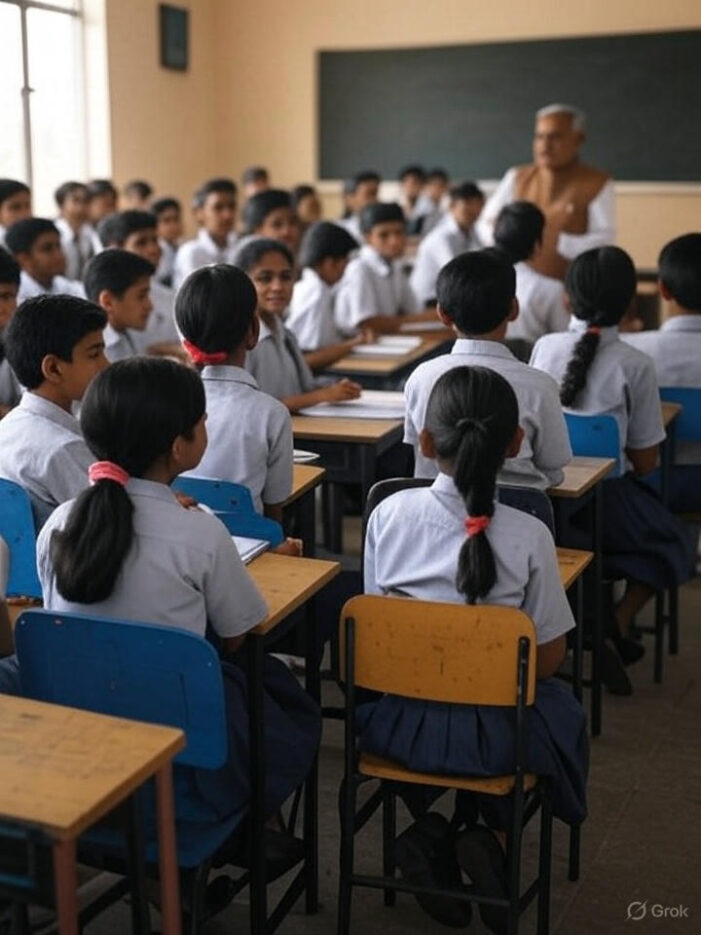
Jaipur, September 22, 2025 – In a landmark ruling aimed at restoring the sanctity of school education, the Rajasthan High Court has directed educational boards to enforce rigorous attendance protocols for students in classes 9 to 12, cracking down on the widespread practice of skipping regular school to attend private coaching centers for competitive exams like NEET and JEE. The decision, delivered by a division bench of Justices Dinesh Mehta and Anoop Kumar Dhand, underscores the court’s concern over “dummy schools” that manipulate attendance records, turning education into a commercial enterprise at the expense of students’ holistic development.
The order comes amid rising reports from Rajasthan’s coaching hub of Kota, where thousands of students flock annually, often prioritizing intensive exam preparation over foundational schooling. The bench emphasized that mandatory attendance is not just a procedural requirement but essential for building competent future professionals, particularly in high-stakes fields like medicine and engineering.
Background: The Rise of ‘Dummy Schools’ and Attendance Manipulation
The controversy erupted from petitions filed by two schools de-affiliated by the Central Board of Secondary Education (CBSE) for deficiencies, including sponsoring “dummy” or non-attending students. These institutions allegedly inflated attendance figures to allow students to focus exclusively on coaching classes, misleading boards and undermining regular education. The court observed that such collusion between schools and coaching centers, often at parents’ behest, confines students to rote learning environments, exacerbating mental health issues and disrupting academic continuity.
In its September 18 order, the bench remitted the de-affiliation matter back to CBSE for re-examination within four weeks, urging a comparative review with similar cases. However, the broader directive targets systemic reform, highlighting how profitable this nexus has become for both schools and coaching institutes.
Key Directives: Enforcing 75% Attendance Threshold
At the heart of the ruling is a push for standardized bylaws across boards. The court mandated that CBSE, Rajasthan Board of Secondary Education (RBSE), and other secondary boards introduce strict rules requiring at least 75% attendance in classes 9 to 12. This threshold applies to both theory and practical sessions, with exams—including board examinations—potentially barred for defaulters whose studies are deemed disrupted by mid-session absences.
Schools must now maintain meticulous records for both students and teachers, ensuring physical presence during class hours. Parents bear equal responsibility, with the court holding them accountable for unauthorized absences. Violations without valid justification will trigger disciplinary actions, extending beyond students to institutions and guardians.
Surprise Inspections and Special Investigation Teams
To operationalize these mandates, the court has ordered the formation of Special Investigation Teams (SITs) by the Rajasthan government and all secondary boards. These teams will conduct random, surprise inspections at schools and coaching centers during school hours. If students are found absent from classes but present at coaching sessions, “strict action” will follow against all stakeholders, including fines, de-affiliation, or legal penalties.
The Rajasthan High Court specified that inspections should be “sudden and random,” with boards empowered to verify classroom attendance on the spot. This measure addresses the ease with which records have been falsified in the past, promoting transparency and accountability.
Implications for Students, Schools, and Coaching Industry
For students already midway through the academic year, the court has extended leniency: those eligible otherwise may appear for upcoming board exams, provided they meet remedial requirements. However, the ruling signals a zero-tolerance era for absenteeism, potentially reshaping Kota’s coaching ecosystem. Institutes may face operational curbs, while schools risk losing affiliations for non-compliance.
Education experts hail the move as a step toward balanced learning, arguing it prioritizes well-rounded development over exam-centric pressure. Critics, however, worry about enforcement challenges in a state where coaching revenues dwarf school budgets. As SITs gear up, all eyes are on whether this judicial intervention will finally prioritize school over coaching.
The full order is available on the Rajasthan High Court website, with compliance deadlines set for early October. Stakeholders have been advised to seek legal recourse if aggrieved by board decisions post-review.

Rajasthan High Court Mandates Strict Attendance Checks to Curb School Skipping for Coaching Classes added by AdminEdu on
View all posts by AdminEdu →