Discovery in a Biodiversity Hotspot
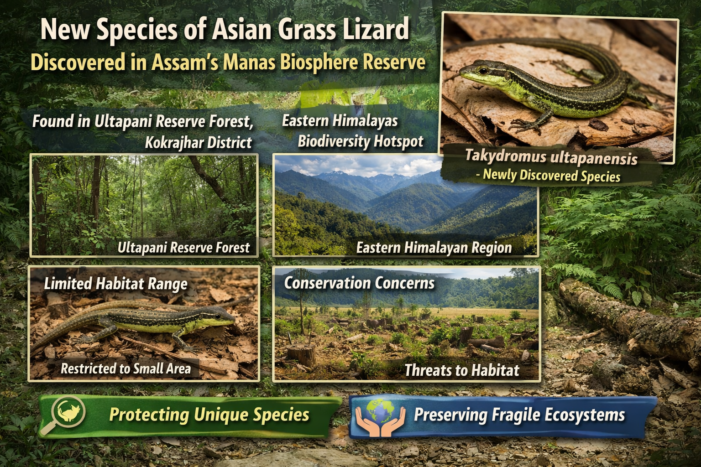
Scientists have discovered a new species of Asian grass lizard named Takydromus ultapanensis in the Manas Biosphere Reserve. The discovery was made during field surveys conducted in the forested landscapes of Assam’s western region, further highlighting the ecological significance of this protected area.
Researchers identified the species in the Ultapani Reserve Forest, located in the Kokrajhar district of Assam. The lizard has been named after the Ultapani region where it was first documented.
Unique Characteristics of the Species
The newly discovered Takydromus ultapanensis belongs to the Asian grass lizard group, which is known for slender bodies, long tails, and strong adaptation to grassy and forest-edge habitats. Scientists observed distinct morphological features and genetic characteristics that differentiate it from other known species in the Takydromus genus.
The species was found inhabiting leaf litter and grassy patches within the forest ecosystem, suggesting a specialized microhabitat preference.
Significance for Eastern Himalayan Biodiversity
The discovery highlights the remarkable biodiversity of the Eastern Himalayan region, one of the world’s most important ecological hotspots. Areas such as the Manas Biosphere Reserve continue to yield new species, reflecting the region’s rich but still underexplored wildlife.
Scientists say such findings demonstrate the ecological importance of protected landscapes in northeastern India and the need for continued biological exploration.
Conservation Concerns
Researchers have also raised concerns about the species’ limited habitat range. Since Takydromus ultapanensis has so far been recorded only in the Ultapani Reserve Forest, habitat loss or environmental changes could pose significant risks to its survival.
Experts emphasize that conserving forest ecosystems and maintaining habitat connectivity in the region will be crucial for protecting newly discovered and lesser-known species.
Importance for Future Research
The discovery opens new avenues for ecological and evolutionary studies on reptiles in the Eastern Himalayas. Scientists believe further surveys in surrounding forests may reveal additional populations or even more previously undocumented species.

New Species of Asian Grass Lizard Discovered in Assam’s Manas Biosphere Reserve added by AdminEdu on
View all posts by AdminEdu →