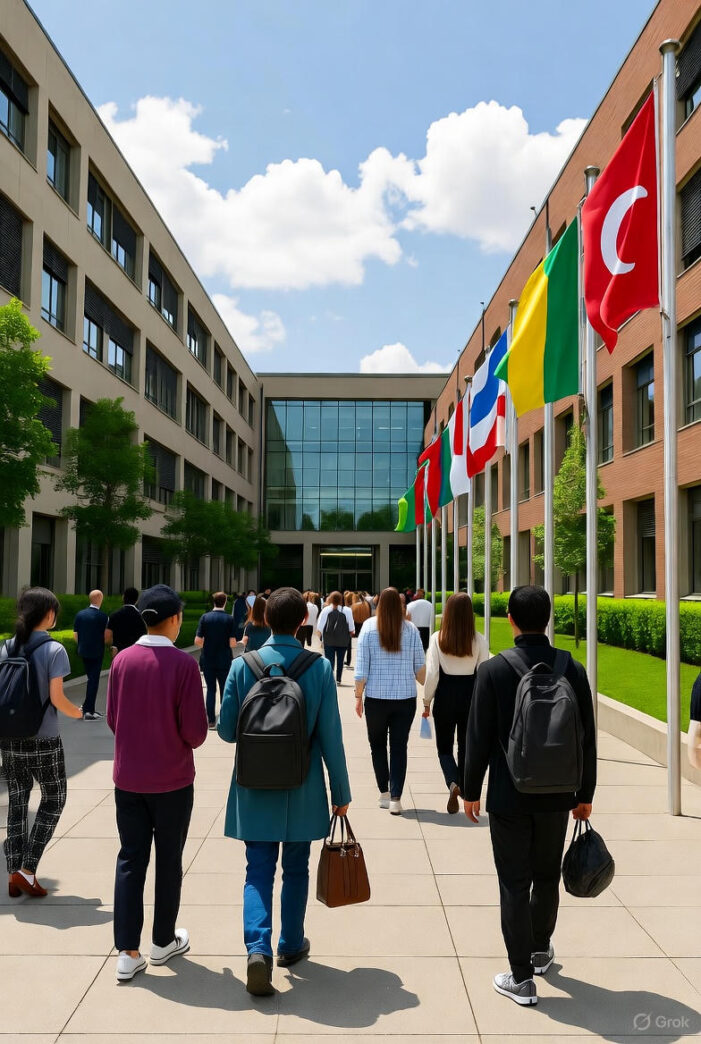
New Delhi, October 24, 2025 – India is witnessing an unprecedented boom in its higher education sector, with a remarkable 26% surge in applications to Master of Business Administration (MBA) programs in 2025, according to recent data from the Graduate Management Admission Council (GMAC). This significant increase underscores India’s growing stature as a global education hub, particularly as traditional destinations like the United Kingdom and Canada experience declines in MBA applications due to visa uncertainties and policy shifts. The trend is opening new avenues for international institutional collaborations, joint programs, and economic growth, as India’s business schools attract a diverse pool of domestic and international talent.
A Shift in Global Education Trends
The global landscape for MBA programs has been undergoing a transformation, with India emerging as a key player. While countries like the UK and Canada have long been preferred destinations for graduate management education, recent changes in immigration policies and visa restrictions have deterred prospective students. In the UK, post-Brexit visa regulations and uncertainties surrounding the Graduate Route visa have led to a reported 15% decline in international MBA applications. Similarly, Canada’s tightened work permit policies and rising costs have contributed to a 12% drop in applications, as per GMAC’s latest report.
In contrast, India’s business schools, including prestigious institutions like the Indian Institutes of Management (IIMs), Indian School of Business (ISB), and XLRI Jamshedpur, have seen a sharp rise in interest. The 26% increase in applications reflects not only growing domestic demand but also a rising influx of international students from Asia, Africa, and the Middle East. “India’s MBA programs are gaining global recognition for their academic rigor, affordability, and strong industry connections,” said Dr. Anjali Gupta, Dean of Admissions at IIM Bangalore. “Our programs offer a unique blend of global perspectives and India-specific insights, which is resonating with students worldwide.”
Factors Driving the Surge
Several factors are contributing to the spike in MBA applications in India. First, the affordability of Indian MBA programs compared to their Western counterparts is a significant draw. Tuition fees at top Indian business schools range from $10,000 to $40,000 for a two-year program, significantly lower than the $80,000–$120,000 charged by leading schools in the US, UK, or Canada. This cost advantage, coupled with a high return on investment due to India’s booming job market, is attracting ambitious professionals.
Second, India’s rapidly growing economy and status as a hub for technology, finance, and entrepreneurship are enhancing the appeal of its MBA programs. With multinational corporations and startups alike expanding their presence in cities like Bengaluru, Mumbai, and Hyderabad, students see an MBA from an Indian institution as a gateway to lucrative career opportunities. “The Indian market offers unparalleled growth prospects,” said Rohan Mehra, a recent MBA graduate from ISB Hyderabad. “I chose ISB because it connects me directly to industry leaders and emerging sectors like fintech and e-commerce.”
Third, the Indian government’s initiatives to promote higher education have bolstered the sector’s global reputation. Programs like the National Education Policy (NEP) 2020 emphasize internationalization, encouraging tie-ups with foreign universities and fostering a more inclusive academic environment. Additionally, streamlined visa processes for international students and post-study work opportunities in India have further enhanced its appeal.
Opportunities for Global Collaboration
The surge in MBA applications is paving the way for strategic partnerships between Indian institutions and global universities. Leading Indian business schools are increasingly collaborating with international counterparts to offer joint degrees, exchange programs, and dual-specialization MBAs. For instance, IIM Ahmedabad recently partnered with Harvard Business School to launch a joint executive education program focused on digital transformation, while ISB Hyderabad has tied up with Singapore’s Nanyang Technological University for a dual-degree MBA program.
These collaborations are mutually beneficial. Indian institutions gain access to global curricula and teaching methodologies, while international partners tap into India’s vast talent pool and dynamic market. “The rise in applications is a signal to the world that India is ready to lead in management education,” said Dr. Sanjay Patel, Director of International Relations at XLRI Jamshedpur. “We’re seeing interest from universities in Europe, the US, and Southeast Asia for joint research, faculty exchanges, and co-branded programs.”
Moreover, the influx of international students is fostering a multicultural learning environment, preparing graduates to thrive in globalized industries. “Our classrooms are more diverse than ever,” said Professor Meera Sharma of SP Jain Institute of Management and Research. “This diversity enriches discussions and equips students with cross-cultural skills that are critical in today’s interconnected world.”
Challenges and the Road Ahead
Despite the positive trends, India’s business schools face challenges in sustaining this growth. Infrastructure constraints, faculty shortages, and the need for continuous curriculum innovation remain hurdles. Additionally, while top-tier institutions like the IIMs and ISB are globally competitive, many second-tier B-schools struggle with quality assurance and accreditation, which could deter international applicants.
To address these issues, experts call for increased investment in infrastructure, faculty development, and global accreditation. “Scaling up capacity while maintaining quality is critical,” said Dr. Gupta of IIM Bangalore. “We need to invest in digital learning platforms, hire world-class faculty, and align our programs with emerging fields like sustainability and artificial intelligence.”
The Indian government is also taking steps to support the sector. The Ministry of Education has announced plans to establish more IIMs and provide grants for research and innovation in management education. Additionally, initiatives like the Study in India program aim to attract 200,000 international students by 2030, further solidifying India’s position as an education hub.
A Bright Future for Indian MBAs
As India cements its reputation as a destination for world-class management education, the surge in MBA applications signals a transformative moment for the country’s higher education landscape. With its cost-effective programs, robust industry connections, and growing global partnerships, India is well-positioned to rival traditional education hubs like the US, UK, and Canada.
For students like Aisha Khan, an international applicant from Nigeria who recently enrolled at IIM Calcutta, the decision was clear: “India offers a dynamic environment to learn and grow. The opportunities here are endless, and I’m excited to be part of this journey.” As more students echo this sentiment, India’s business schools are poised to shape the next generation of global business leaders, driving innovation and economic growth on a global scale.

Surge in MBA Applications Positions India as a Global Education Hub added by AdminEdu on
View all posts by AdminEdu →